As an Amazon Associate, we earn from qualifying purchases. This doesn’t affect the price you pay or which picks we recommend.
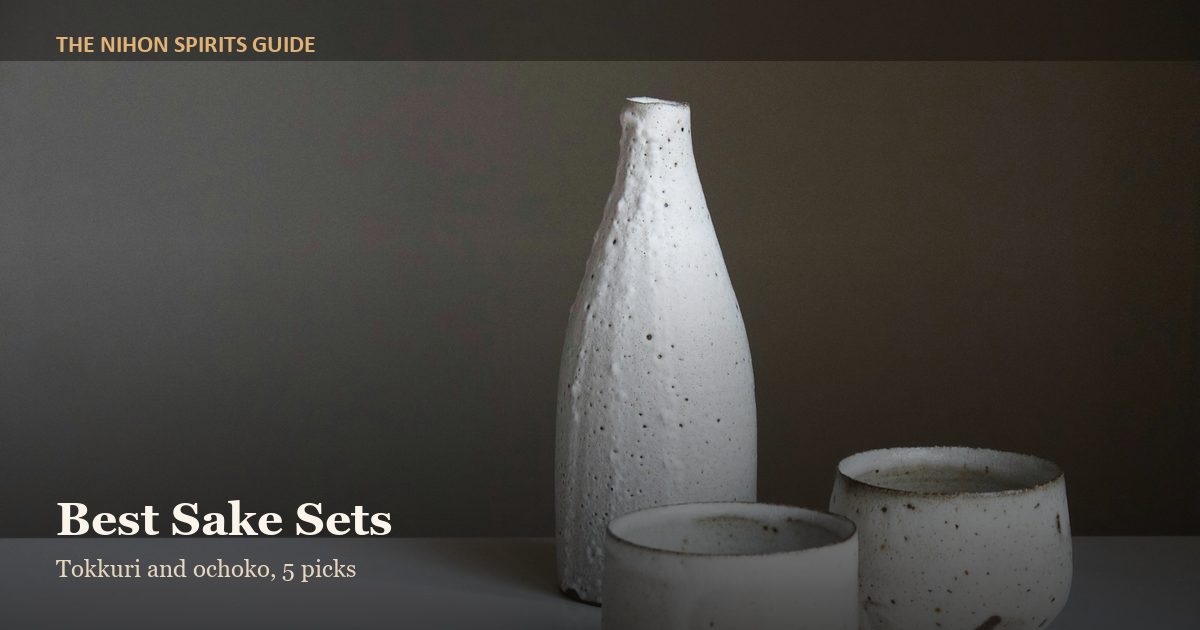
Quick answer: the best sake sets for most people are a tokkuri and ochoko set — a small carafe and matching cups, the way sake is traditionally served. If you want the real Japan-made version, get the Gifu Kuro Oribe set below. If you want the more casual, communal way to drink it, a masu wooden box is the other traditional option worth knowing about.
Sake Sets Explained: Tokkuri, Ochoko, and Masu
A tokkuri is a small ceramic carafe used to pour and sometimes gently warm sake. An ochoko is the small cup it’s poured into — usually just an ounce or two, meant for small, frequent pours rather than sipping slowly from a large glass. A masu is a square wooden box, originally used to measure rice, that’s also used as a sake cup — often filled to the point of deliberately overflowing as a gesture of generosity.
Comparison at a Glance
| Set | Style | Made In | Best For |
|---|---|---|---|
| Gifu Kuro Oribe Tokkuri Set | Ceramic tokkuri + 4 ochoko | Japan (Gifu / Mino ware) | Authentic traditional serving |
| JapanBargain Hinoki Masu, Set of 4 | Wooden masu cups | Japan (Hinoki cypress) | Traditional masu-style drinking |
| Tebery 5-Piece Sake Set | Porcelain tokkuri + 2 ochoko | Imported | Budget-friendly starter set |
| Mozacona 3-in-1 Warmer Set | Tokkuri + ochoko + warmer | Imported | Actually warming sake at home |
| ABuff Gift Set with Tray | Tokkuri + 4 ochoko + tray | Imported | Gifting |
Prices vary by retailer and change often — treat these as a starting point, not a quote.
1. Gifu Kuro Oribe Tokkuri & Ochoko Set — Best Overall
This one is genuinely made in Japan, in Gifu prefecture — home to Mino ware, one of Japan’s major ceramics traditions. It uses a Kuro Oribe glaze: a dark, matte-black finish that’s part of the same Oribe ware family associated with tea ceremony aesthetics, not just a generic “Japanese-style” pattern slapped on imported ceramic.
The set includes one tokkuri carafe and four matching ochoko cups, sized appropriately for the small, frequent pours sake is traditionally served in.
Pros:
- Genuinely made in Japan, from a real ceramics-producing region
- A distinctive, non-generic glaze style with real craft history behind it
- Sized and shaped the traditional way, not oversized for the sake it’s meant to hold
Cons:
- Pricier than the imported alternatives on this list
- Hand-finished ceramics mean small variation between pieces — expected, not a defect
Bottom line: the one to buy if you want the real thing, not just the look of it.

Kuro Oribe Tokkuri & Ochoko Set, 5pc
Ceramic sake glasses. 4.4★ (79 ratings).
2. JapanBargain Hinoki Masu, Set of 4 — Best for Traditional Masu-Style Drinking
Also genuinely made in Japan, using hinoki cypress — the same wood used in traditional Japanese baths and temple construction, prized for its light, clean fragrance. Sake poured into a fresh hinoki masu picks up a faint woody aroma that ceramic or glass simply doesn’t give you.
These are the small, interlocking-joint style built to prevent leaking despite having no metal fittings or glue at the seams — a genuinely traditional piece of joinery, not just a novelty box.
Pros:
- Real hinoki wood, made in Japan
- Adds a genuine aroma dimension you don’t get from other serving styles
- Traditional and conversation-worthy for guests unfamiliar with sake culture
Cons:
- Wood absorbs some aroma and flavor over repeated use — not ideal if you want a neutral vessel
- Not microwave or dishwasher safe like the ceramic options
Bottom line: the pick for anyone who wants to try sake the more casual, traditional masu way.

JapanBargain Hinoki Masu, Set of 4
Cypress hinoki wood, made in Japan. 4.4★ (90 ratings).
3. Tebery 5-Piece Sake Set — Best Budget Pick
An imported porcelain set — worth being upfront that this isn’t a Japan-made piece, just a Japanese-style set at a much lower price than the Gifu option. For someone who wants to try serving sake properly without spending much, it’s a reasonable, honestly-marketed choice.
Pros:
- The lowest price on this list by a wide margin
- Practical size (8 fl oz tokkuri, 2 fl oz cups) for actual home use
- Low-risk way to try the tokkuri-and-ochoko format before spending more
Cons:
- Not made in Japan — generic porcelain rather than a specific regional ceramic tradition
- Only 2 ochoko cups included, versus 4 on most of the other sets here
Bottom line: fine for testing whether you’ll actually use a proper sake set before upgrading.

Tebery 5-Piece Ceramic Sake Set
Porcelain tokkuri bottle and 4 ochoko cups. 4.8★ (54 ratings).
4. Mozacona 3-in-1 Warmer Set — Best for Actually Warming Sake
Most sets assume you’re drinking sake cold or at room temperature, which is right for the premium Junmai Ginjo and Daiginjo styles covered in our sake beginners guide — but if you specifically want to try warmed sake the traditional way, this set includes an actual warming vessel, not just a carafe.
Pros:
- The only set on this list actually built for warming sake, not just serving it
- Compact and simple — not overbuilt for a single-person setup
Cons:
- Only includes 1 ochoko cup — fine solo, not for sharing
- Warming isn’t appropriate for the fragrant, premium sake styles most beginners start with
Bottom line: a niche but genuinely useful pick if you specifically want to explore warmed sake.

Ceramic 3-in-1 Sake Warmer Set
Tokkuri bottle, ochoko cup, and wine warmer. 4.8★ (13 ratings).
5. ABuff Gift Set with Tray — Best for Gifting
An imported set, but the presentation is genuinely gift-appropriate: tokkuri, four ochoko cups, and a matching wooden tray, all boxed together. For someone who wants a complete, ready-to-give sake set without assembling pieces separately, this covers it.
Pros:
- Complete presentation — tray included, not sold separately
- Four cups included, enough for sharing with guests
- Reasonable price for the amount of matching pieces included
Cons:
- Not made in Japan
- The tray is a nice touch but not something you’d buy this set for on its own
Bottom line: the easiest single option to buy as a gift for someone getting into sake.

ABuff Sake Set with Wooden Tray
Tokkuri bottle, 4 ochoko cups, microwave/dishwasher safe. 4.6★ (66 ratings).
Curious specifically about the masu box and how the traditional overflow pour actually works? Our dedicated guide to masu sake boxes covers that in more depth than the roundup below.
Which One Should You Buy?
The best sake sets for you depend on whether authenticity, budget, or occasion matters most:
- Want the real, Japan-made thing: get the Gifu Kuro Oribe set.
- Curious about the traditional masu style: get the JapanBargain Hinoki Masu set.
- Just want to try the format cheaply: get the Tebery set.
- Specifically want to warm your sake: get the Mozacona 3-in-1.
- Buying this as a gift: get the ABuff set with tray.
FAQ
Do I need a tokkuri and ochoko set, or can I just use a wine glass?
You don’t need one — a lot of sake drunk outside Japan is poured into wine glasses, and that’s fine for evaluating aroma. A proper set is about tradition and the ritual of small, frequent pours, not a functional requirement.
Should sake be served warm or cold?
It depends on the grade. As covered in our sake for beginners guide, premium Junmai Ginjo and Daiginjo styles are generally best served cold or lightly chilled to preserve their aromatics. Warming is traditional, but it’s mostly done with cheaper table-grade sake.
What’s the point of a masu if it’s made of wood?
Traditionally, masu were a rice-measuring box repurposed for drinking, and the wood — usually hinoki cypress — adds its own mild aroma to the sake. It’s as much about the ritual and the scent as it is about function.
Final Thoughts
If you’re just starting out, the Tebery set is a low-risk way to try serving sake properly before spending more. Once you know you’ll keep using it, the Gifu Kuro Oribe set is a genuine upgrade in both authenticity and craft. And if you’re building out a full home tasting setup, our guide to the best glasses for Japanese whisky covers the equivalent picks for whisky nights.