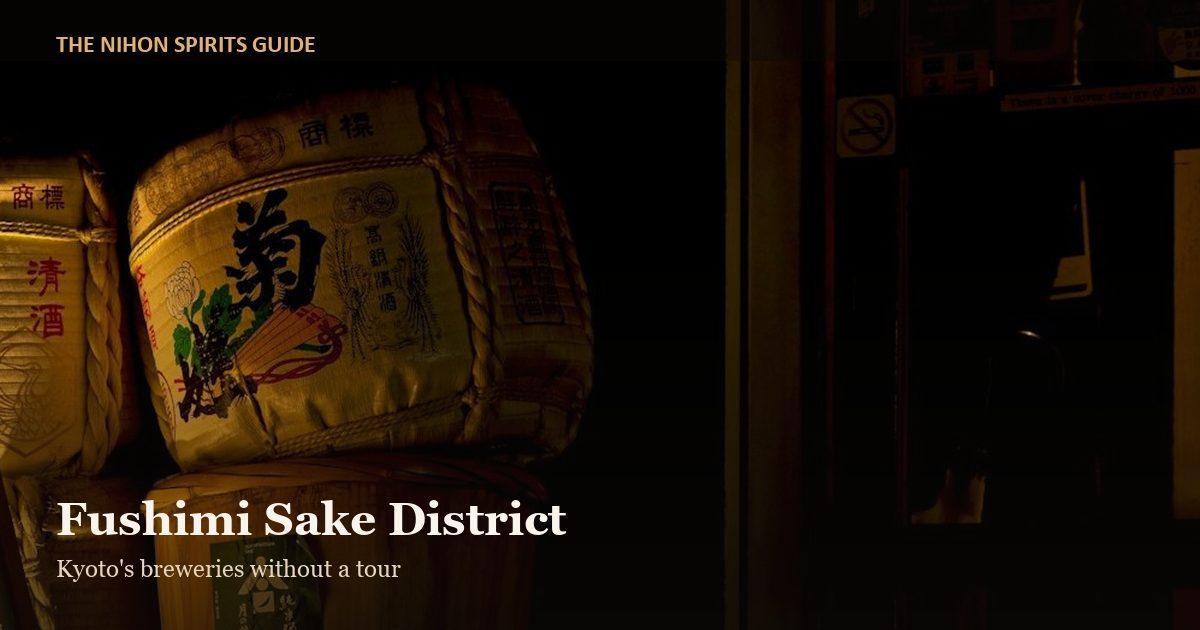
Fushimi sits at the southern end of the Kyoto basin, and its soft groundwater has made it one of Japan’s biggest sake towns; the local brewers’ food hall describes it as the second-largest sake-producing area in the country. Unlike Suntory’s whisky distilleries, there’s no lottery and no booking two months out. Most of what a visitor can see is open to walk-ins. This guide covers the stops that are, using each operator’s own pages, checked on November 1, 2026.
In this guide
Fushimi Sake District at a Glance
| Stop | What you get | Cost | Booking |
|---|---|---|---|
| Gekkeikan Okura Sake Museum | A 1909 brewery building, brewing tools, a short film, and a tasting at the end | ¥600 (20+), ¥100 (13–19), free (12 and under) | Online booking gets priority; walk-ins accepted |
| Fushimi Sakagura Kouji | A food hall pouring sake from the 18 breweries of the Fushimi Sake Brewers’ Association | Pay per drink and dish | Seat bookings go through each shop |
| Kizakura Kappa Country | Kizakura’s restaurant in a converted brewery, with sake and beer made on site | Lunch averages about ¥1,000 | Not needed |
Gekkeikan Okura Sake Museum: The One Real Brewery Visit
Gekkeikan runs the district’s main museum in a sake brewery built in 1909. Inside are the wooden tubs, barrels and paddles once used to make sake, designated by Kyoto City as tangible folk cultural properties, a film on traditional brewing, and the well that still draws groundwater from beneath the Momoyama Hills. Next door, the Uchigura brewery, dating from 1906, still makes sake by traditional methods. The visit ends with a tasting of Gekkeikan sake, and visitors 13 and older get a free gift.
The details from Gekkeikan’s English visitor page:
- Hours: 9:30–16:30, last admission 16:00. Closed December 28 to January 4 and August 13 to 16. Gekkeikan has also posted a notice of temporary closures and changed hours for November, so check the page before you go.
- Payment: cashless only. Cards, e-money and mobile payment work; cash doesn’t.
- Booking: a timed online reservation (in Japanese) gets priority entry. You can walk in, but you may have to wait.
- No guide: visits are self-guided. Gekkeikan’s museum guide runs on your own phone over free Wi-Fi.
- Groups of 13 or more aren’t accepted.
The brand shop sells Gekkeikan sake, including some bottles sold only there, and you can visit it without paying admission.
Fushimi Sakagura Kouji: Taste the Whole District in One Room
Most of Fushimi’s breweries don’t run public tours, so the practical way to compare them is Fushimi Sakagura Kouji (伏水酒蔵小路), a food hall whose sake comes from the 18 breweries of the Fushimi Sake Brewers’ Association. One counter is set up for tasting across all 18, and the other stalls sell sushi, kushikatsu, oden and other food. You can order the counter’s sake and any stall’s food from whichever seat you’re in.
If you’re new to sake grades, our sake for beginners guide explains what to ask for. The site doesn’t list opening hours on its front page, so check it, or its Instagram, before you plan an evening around it.
Kizakura Kappa Country: Lunch in a Brewery
Kizakura, another Fushimi brewer, runs Kizakura Kappa Country, a restaurant in a converted sake brewery with beer from its own on-site brewhouse and sake you can only drink there. According to Kizakura’s restaurant page, it serves lunch from 11:30 on weekdays and 11:00 on weekends and holidays (last order 14:00), and dinner from 17:00 (last order 20:50). It’s closed on Tuesdays (Wednesdays when Tuesday is a holiday) and on December 31 and January 1. Kizakura gives the average lunch spend as about ¥1,000.
If you’re in Kyoto on Saturday, November 7, 2026, Kizakura is holding a brewery open day at its Fushimigura brewery from 10:00 to 15:00, according to a report in the trade paper Nihon Shokuryo Shimbun. Open days like this are the main chance to get inside a working Fushimi brewery without a tour.
Getting There
The three stops sit close together. Gekkeikan lists the museum as a 5-minute walk from Keihan Chushojima Station, 10 minutes from Keihan Fushimi-Momoyama, 10 minutes from Kintetsu Momoyamagoryo-mae, and 18 minutes from JR Momoyama. Kappa Country is about 7 minutes from either Keihan station. Chushojima is on the Keihan Main Line, the same line that serves Fushimi Inari Taisha, so the two make an easy half day together.
Should You Book a Guided Tour?
Booking sites sell guided Fushimi sake walks, some advertising 18 tastings in about two and a half hours. They’re useful if you want a guide to explain what you’re drinking, or if you want to see inside a brewery such as Masuda Tokubee Shoten, the maker of Tsuki no Katsura, which sits south of the main district and offers visits through third-party tours. If you mainly want to taste, though, the museum plus the food hall covers it for the price of the drinks.
Who Should Skip Fushimi
If you don’t drink and aren’t interested in how sake is made, Fushimi has less to offer than central Kyoto; the streets are pleasant, but the main attraction is the sake. And if you’re hoping to see sake actually being brewed, come in winter: Gekkeikan notes that brewing peaks in the coldest months, when the smell of steaming rice and fermenting mash fills the district.
Bringing Fushimi Home
Several Fushimi breweries export, so you can find their sake abroad. Palate Project, a US online sake shop, had these in stock when we checked on November 1, 2026:
- Kizakura “S” (500ml, $17): a junmai daiginjo from Kizakura made with Yamada Nishiki rice and Fushimi water.
- Tozai “Living Jewel” (720ml, $25): a gentle junmai that Palate describes as highlighting Fushimi’s water.
- Tsuki no Katsura “Iwai 88” (720ml, $35): from Masuda Tokubee Shoten in Fushimi.
All three are on Palate Project. If you’re buying in Japan to take home, our guide to airport duty-free sake and whisky covers what you can find at the airport, and how much alcohol you can bring back covers the customs limits.
FAQ
How do I get to the Fushimi sake district from Kyoto Station?
The simplest route is the Kintetsu Kyoto Line from Kyoto Station to Momoyamagoryo-mae, a 10-minute walk from the Gekkeikan Okura Sake Museum. From the Keihan Line, get off at Chushojima, 5 minutes from the museum.
How much is the Gekkeikan Okura Sake Museum?
¥600 for visitors 20 and older, ¥100 for ages 13 to 19, and free for 12 and under. The fee includes a tasting and, for 13 and older, a free gift. Payment is cashless only.
Do I need a reservation for Fushimi sake breweries?
Not for the main stops. The Gekkeikan museum takes walk-ins, though an online booking gets priority, and you can walk into the food hall and Kizakura’s restaurant.
Can you tour a working sake brewery in Fushimi?
The Gekkeikan museum stands next to a working brewery, and some brewers hold open days, such as Kizakura’s on November 7, 2026. Visits inside other breweries usually go through a paid guided tour.
How long do you need in Fushimi?
Half a day covers the museum, a tasting at the food hall, and lunch. It pairs well with a morning at Fushimi Inari Taisha on the same train line.
Final Thoughts
Fushimi is the easiest sake district in Japan to visit on your own. Go to the Gekkeikan museum early with a card rather than cash, taste across the district at Sakagura Kouji, and eat at Kizakura’s brewery restaurant. Save the guided tour for when you want someone to explain the glass in front of you.