
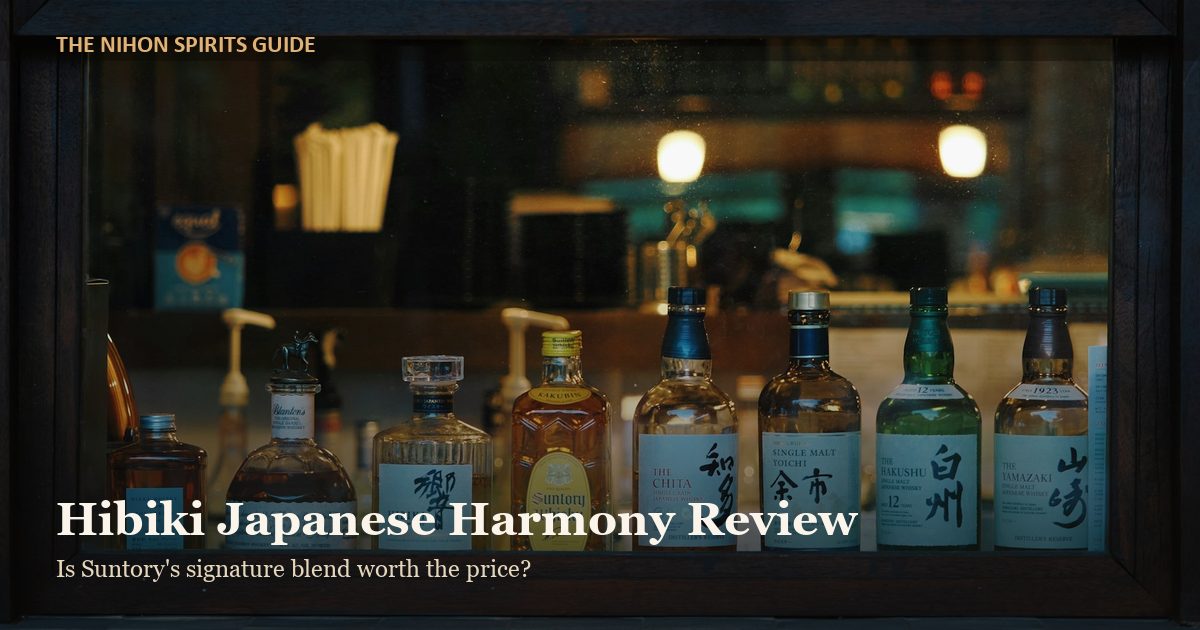
Quick answer: yes, this Hibiki Japanese Harmony review lands on worth it — with a caveat. It’s one of the most polished, best-balanced entry points into Japanese whisky you can buy, and the JSLMA production standard checks out cleanly. But it’s a special-occasion sipper built around subtlety, not intensity, so it’s the wrong bottle if you’re chasing peat smoke or a big sherry punch.
What Hibiki Harmony Actually Is
The Hibiki name goes back to 1989, when Suntory launched it under then-president Keizo Saji to mark the company’s 90th anniversary — a premium blend meant to show off everything Suntory’s distilleries could do together, packaged in a distinctive 24-facet bottle that nods to the 24 micro-seasons of the traditional Japanese calendar. Japanese Harmony itself is newer: it arrived in 2015 as the replacement for the age-stated Hibiki 12, as international demand outpaced the aged malt stock needed to keep an age statement on the label — the same supply squeeze that eventually took Hibiki 17 off shelves too.
Harmony blends malt whisky from Yamazaki and Hakushu with grain whisky from Chita — all three Suntory-owned, all in Japan — matured across five cask types, including ex-bourbon, sherry, and rare Mizunara oak. It’s bottled at 43% ABV. House of Suntory’s official Hibiki Japanese Harmony page covers the same blend composition directly from the producer. Every component is mashed, fermented, distilled, aged for at least three years in wood, and bottled domestically, which is exactly what the JSLMA’s self-regulatory standard for “Japanese whisky” requires; our Suntory Toki authenticity check walks through the same five-point standard in more detail if you want to see how it’s applied bottle by bottle.
What It Actually Tastes Like
Harmony opens with delicate florals — rose and orange blossom — layered over honey, orange peel, and white chocolate, with vanilla and sandalwood underneath from the American oak, and a light dusting of cinnamon spice as it opens up. The Mizunara component shows as a faint whisper of smoke rather than anything assertive, and the finish is short to medium, closing on white pepper and oak rather than lingering sweetness.
Nothing here is loud. The whole point is how cleanly the pieces sit together.
That restraint is exactly what divides opinion on it. If you’re coming from bourbon’s caramel-forward sweetness or a heavily peated Islay scotch, Harmony can read as understated to the point of thin on a first pour. Give it time in the glass, or a few drops of water, and the layering opens up — but it’s never going to hit as hard as something built for intensity.
How to Drink It
Neat or with a large ice cube is the standard serve, and it’s the one that shows the floral and citrus notes best. It also makes a genuinely excellent highball — soda water and ice lengthen the whisky without drowning the delicate aromatics the way a heavier blend would tolerate.
It isn’t the pick for a cocktail that needs a whisky to push back against other strong ingredients; save something drier and more assertive, like Mars Iwai Tradition, for that job.
Hibiki Japanese Harmony Review: Is It Actually Worth It?
Pros:
- Genuinely excellent balance and blending craft — the reason it’s the Japanese whisky most non-whisky drinkers have actually heard of
- Passes the JSLMA standard cleanly, with production entirely inside Suntory’s own Japanese distilleries
- Works equally well neat, on the rocks, or as a highball
- The bottle and packaging make it a genuine gift-worthy pour, not just a good drink
Cons:
- Subtle to the point of underwhelming if you’re used to bolder bourbon or heavily peated scotch
- MSRP sits around $80–90, but street pricing at most US retailers now commonly runs $90–130
- No age statement, which still puts some buyers off even though it doesn’t affect JSLMA compliance
- Short-to-medium finish means it doesn’t reward long, slow sipping the way a heavier whisky can
If You Can’t Find It (Or Want to See the Alternatives)
Harmony sells well enough that it’s occasionally out of stock at individual retailers, even though it isn’t a scarce allocation bottle the way Hibiki 21 or the discontinued 17 are. If you’re weighing it against other options in the same price bracket, our Hibiki Harmony alternatives guide covers five bottles worth trying instead, each already reviewed on this site.
Deciding between the two? Our Hibiki Harmony vs Yamazaki 12 comparison covers how the blend and the single malt differ in style and price.
FAQ
Is Hibiki Japanese Harmony a real Japanese whisky, or a world blend?
Real Japanese whisky under the JSLMA standard — every component is mashed, fermented, distilled, aged, and bottled in Japan at Suntory’s own distilleries. It’s not in the same category as a world blend like The Kurayoshi Sherry Cask, which imports Scottish malt.
What replaced Hibiki 12, and why doesn’t Harmony have an age statement?
Harmony replaced Hibiki 12 in 2015. Like many Japanese blends from that era, it dropped the age statement because aged malt stock couldn’t keep pace with international demand — a labeling choice, not evidence of younger whisky underneath.
Is Hibiki Harmony good for someone new to Japanese whisky?
Yes, it’s one of the most approachable premium bottles to start with, especially if you find bourbon too sweet or scotch too smoky. If budget is the bigger concern, Suntory Toki gets you a similar house style for less.
How does it compare to Hibiki Blossom Harmony or Master’s Select?
Those are separate, limited-availability expressions in the same family rather than variations on this bottle. This review covers the standard Japanese Harmony release, which is the one most widely stocked outside Japan.
Final Thoughts
The short version of this Hibiki Japanese Harmony review: it earns its reputation as the most recognizable name in Japanese whisky through genuine blending skill, not just marketing, and it clears the JSLMA bar the same way Suntory’s other domestic releases do. It’s not the bottle for anyone chasing power or smoke, but as a balanced, gift-worthy introduction to the category, it’s hard to beat. If you want to see how it stacks up against other bottles at a similar price, our Hibiki Harmony alternatives guide is the next stop, and our Real Japanese Whisky complete list tracks every bottle we’ve checked against the standard so far. Shop it at The Whisky Exchange →
