Packing tip: bottles you buy in a city shop rather than at duty-free have to go home in checked luggage, so wrap each one in a padded sleeve such as the Liquid Spectrum Bottle Shield.
In this guide
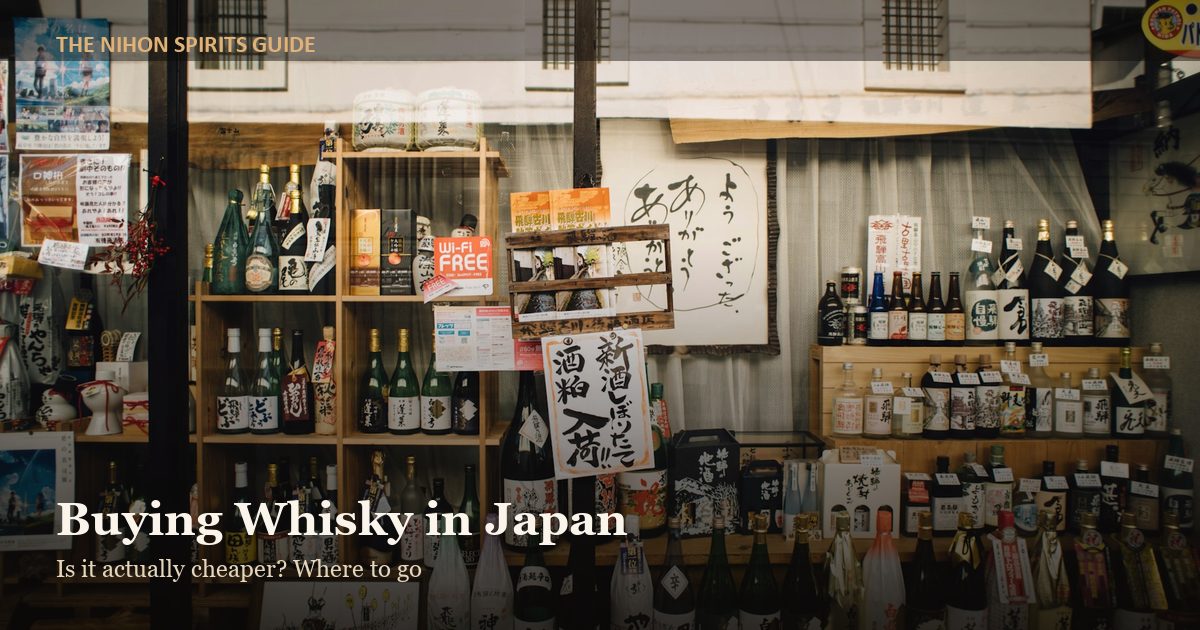
Is Japanese Whisky Actually Cheaper in Japan?
Generally, yes, for the bottles that matter most to most buyers. Standard releases without a big age statement — the kind covered in our Japanese whisky under $100 guide — can run meaningfully cheaper domestically than what you’d pay after import markup abroad, since Japanese retail pricing isn’t carrying the same distribution and import costs that inflate prices overseas.
| Bottle | Price in Japan (with tax) | In US dollars | Typical US shelf price |
|---|---|---|---|
| Hibiki Japanese Harmony | ¥8,800 | about $56 | $90–130 |
| Hakushu 12 | ¥17,600 | about $112 | $140–230 |
| Yamazaki 12 | ¥17,600 | about $112 | $180–240 |
Japan prices are Suntory’s 2026 suggested retail prices including 10% consumption tax. Dollar figures use ¥157.25 to the dollar, the European Central Bank reference rate on October 30, 2026. US ranges are the street prices in our Hibiki Harmony vs Yamazaki 12 and Yamazaki 12 vs Hakushu 12 comparisons.
The exception is exactly the bottles you’d expect: heavily allocated, age-stated names like Yamazaki 18 or Hibiki 21 are priced close to global scarcity value no matter where you buy them, because demand for those specific bottles is international, not local. You might still find better selection in Japan — more expressions on the shelf, less picked-over stock — even when the price on the flagship bottle isn’t dramatically different.
For exact numbers, we keep price guides for the brands people ask about most: Yamazaki, Hibiki, Hakushu, and Nikka. Each one lists the maker’s suggested or reference price, what the airport sells instead, and what the same bottles cost abroad.
Where to Actually Buy It (Not the Airport)
| Where | What It’s Good For |
|---|---|
| BicCamera | Japan’s big electronics chain also runs serious liquor sections with competitive pricing. Since November 1, 2026, tourists pay the tax at the register and claim it back at customs when leaving Japan — often a better stop than the airport if you’re not flying out same-day |
| Independent liquor shops (sakaya) | Smaller specialist stores carry a wider range of regional and limited releases than big chains, though selection varies store to store |
| Don Quijote | The discount chain stocks alcohol at most locations and is open late, useful if you’re shopping outside normal retail hours rather than for the deepest selection |
| Distillery gift shops | Suntory’s Yamazaki and Hakushu distilleries and Chichibu’s Ichiro’s Malt both sell distillery-exclusive bottlings you can’t buy anywhere else, in Japan or out — the strongest case for buying on-site rather than just for price |
Airport duty-free has its own place in this — mainly for travel-exclusive editions and last-minute convenience — but our duty-free guide is honest that it isn’t always the cheapest option even within Japan. A city stop often beats it on standard bottles.
Why Some Japanese Whisky Is So Expensive in the First Place
The scarcity isn’t artificial marketing — it’s a real supply problem the industry created for itself. Demand for Japanese whisky spiked internationally through the 2010s, well after the whisky now hitting shelves had already been distilled and laid down to age years earlier. Distilleries couldn’t retroactively make more 18-year-old stock appear; they could only wait, or shift toward no-age-statement blends like Suntory Toki that don’t require a decade-plus of aged inventory to bottle. That’s a large part of why age-stated bottles command such a premium now, in Japan or anywhere else.
Anything you buy at a city shop has to go home in checked baggage, since carry-on liquids are capped at 100ml. A reusable padded sleeve like the Liquid Spectrum Bottle Shield, or inflatable air-column bags for odd-shaped bottles, is cheap insurance against a broken bottle in your suitcase.
FAQ
Should I buy at the airport or in the city?
The city, if price is your priority and you have the time — BicCamera and independent shops routinely beat duty-free on standard bottles. The airport is worth it specifically for travel-exclusive editions you can’t buy elsewhere; see our duty-free guide for that angle.
Is it worth visiting a distillery just to buy whisky?
If you’re already planning to visit one, yes — distillery-exclusive bottlings are the one category you genuinely can’t get by shopping smarter elsewhere. If a special trip is only for the purchase, weigh the travel cost against what you’d actually save.
Can I bring Japanese whisky home without paying duty?
That depends entirely on your home country’s duty-free alcohol allowance, not on anything Japan restricts. Check your own country’s rules before you buy, not a generic number you saw online — our guide to exactly how much you can bring back covers the US, UK, EU, and Australian numbers.
Is Japanese whisky actually cheaper in Japan than back home?
Generally yes for standard releases without a big age statement, since Japanese retail pricing doesn’t carry the same import and distribution markup you’d pay overseas. The exception is scarce, age-stated bottles like Yamazaki 18 or Hibiki 21, which are priced close to the same everywhere because demand for them is global, not local.
Final Thoughts
If you’re in Japan anyway, a stop at BicCamera or a local liquor shop will usually beat the airport on price for anything that isn’t already scarce worldwide — and if a distillery is on your route, that’s where the genuinely unique bottles are. For what to look for once you’re deciding between bottles, our Japanese whisky under $100 guide is the place to start.
Keep Reading
- Want the numbers brand by brand? See our Yamazaki, Hibiki, Hakushu, and Nikka price guides.
- Choosing between Suntory’s two single malts? Read Yamazaki 12 vs Hakushu 12.
- Buying bottles to hold rather than drink? Read is Japanese whiskey a good investment?
- Want to see where Japanese whisky is made? Our Yamazaki distillery tour guide covers the booking lottery, our Nikka distillery tour guide covers Yoichi and Miyagikyo, which are free and easier to book, and our Hakushu distillery tour guide covers Suntory’s forest distillery near Tokyo.
- Visiting Kyoto? Our Fushimi sake district guide covers the Gekkeikan museum and where to taste sake from 18 local breweries without a tour.