
Quick answer: the safest Japanese sake gift for someone new to it is a bottle of Dassai 45 — it’s widely available, fruity enough to win over a skeptic, and priced so a bad guess doesn’t sting. If you’d rather not gamble on a bottle at all, a sake serving set or a pairing of good cups works for literally anyone who drinks sake, regardless of what they currently have open. Five more options below, covering bottles, serving pieces, and consumables.
Some of the retailers we link to, including Palate Project and Amazon, are partners who may pay us when you buy through them. This doesn’t change which picks we recommend. How this works. Palate Project reader code FRIEND-52L8RVN takes 10% off your order.
Bottle or No Bottle? How to Decide
A bottle is the obvious gift, but it’s also the one most likely to miss. Sake spans a wide range of styles — dry and clean, fruity and aromatic, sweet and cloudy — and someone’s existing wine or spirits preferences don’t map onto it as cleanly as you’d hope. If you know the recipient has never had real sake before, a well-chosen bottle like Dassai 45 is a safe, crowd-pleasing bet. If you’re not sure, or you know they already drink sake regularly and might already own something similar, a serving piece or a consumable sidesteps the guesswork entirely — it’s useful no matter what they currently have in the cabinet.
Japanese Sake Gifts: Comparison at a Glance
| Gift | Type | Price | Best For |
|---|---|---|---|
| Dassai 45 | Bottle (Junmai Daiginjo) | ~$35–45 | Someone new to sake |
| Sake Serving Set (Tokkuri & Ochoko) | Serving pieces | ~$20–45 | Anyone who drinks sake, no bottle guessing |
| Sake Cups (Guinomi/Ochoko) | Serving pieces | ~$15–35 | Someone who already has a tokkuri |
| Otsumami Pairing Snacks | Consumable | ~$10–25 | Add-on to any bottle gift |
| Dassai 23 | Bottle (Junmai Daiginjo) | ~$70–100 | Splurge / someone who already knows sake |
| Book About Sake and Whisky | Consumable / reading | ~$15–30 | The person who likes the culture as much as the drink |
1. Dassai 45 — Best Bottle for Someone New to Sake
Dassai 45 is the sake we point beginners to first, and it works the same way as a gift. It’s a Junmai Daiginjo (polished to 45% of the original grain), which puts it well inside premium territory without the price tag of Dassai’s top bottling. The flavor is fruity and approachable — closer to what a wine drinker expects than the sharper, drier styles that can put newcomers off sake entirely. We cover the full tasting notes and history of the brewery in our Dassai 45 review.
Why it works as a gift: it’s the single most widely stocked premium sake outside Japan, so availability isn’t a problem, and it’s hard to dislike even for someone drinking real sake for the first time.
Bottom line: the default choice if you’re buying a bottle for someone who doesn’t already have a favorite. Palate Project carries Dassai 45 — shop it here →
2. Sake Serving Set (Tokkuri & Ochoko) — Best “Ready to Serve” Gift
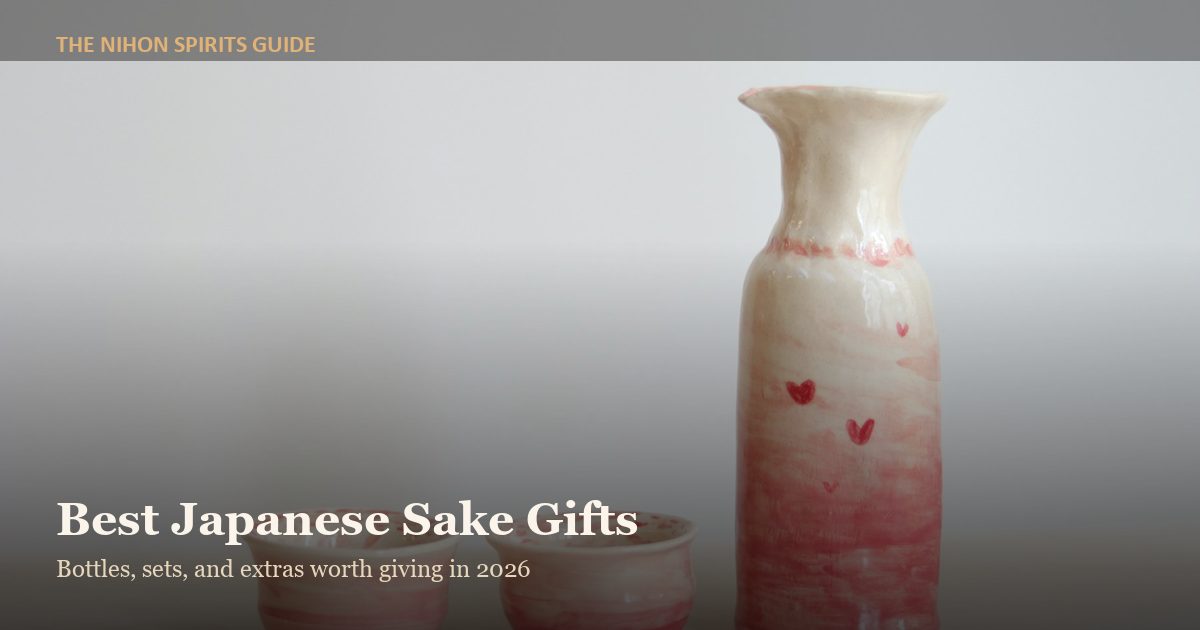
A tokkuri (the serving flask) and a set of ochoko (small cups) turn any bottle into an occasion, and they work for someone who owns zero sake gear as easily as someone who wants a nicer set than what they have. Our sake serving sets guide compares real ceramic options, including which ones are genuinely made in Japan versus imported look-alikes.
Why it works as a gift: it doesn’t require you to guess which bottle they’d like, and it’s useful the moment they open literally any sake.
3. Sake Cups (Guinomi/Ochoko) — Best for Someone Who Already Has a Tokkuri
If the recipient already owns a serving flask, a fresh set of cups is a smaller, lower-cost gift that still upgrades how they drink. Material actually changes the experience here — ceramic is the all-purpose choice, tin gives a noticeably smoother pour, and cypress wood adds its own aroma to the sake. Our sake cups guide breaks down all three.
Why it works as a gift: it’s a lighter, less expensive pick than a full set, and it’s easy to size to your budget — a single well-made ceramic pair or a proper tin guinomi both land well.
4. Otsumami Pairing Snacks — Best Add-On to a Bottle
Otsumami are the traditional Japanese snacks built to go alongside sake — things like kaki no tane (rice crackers), dried squid, and edamame — and they make a natural add-on if you’re already giving a bottle. Our otsumami guide covers real picks, including which ones are actually made in Japan.
Why it works as a gift: it’s inexpensive, it turns a bottle-only gift into something closer to a full experience, and unlike a bottle or serving set, it doesn’t require the recipient to already be into sake — anyone can snack.
5. Dassai 23 — Best Splurge Bottle
Dassai 23 is the brewery’s original flagship — polished all the way down to 23% of the original grain, which is an unusually deep polish even by Junmai Daiginjo standards. It’s a genuine splurge bottle: more refined and more expensive than Dassai 45, and the right call for someone who already knows they like sake rather than someone trying it for the first time. We cover it in full in our Dassai 23 review, and if you’re choosing between the two, our Dassai 23 vs. Dassai 39 comparison lays out where each one fits.
Why it works as a gift: it reads as a real splurge without needing a rare, hard-to-find bottle — Dassai 23 is genuinely special and still something you can reliably buy.
Bottom line: the pick for a recipient who already takes sake seriously, or for an occasion that calls for spending more. Palate Project carries Dassai 23 — shop it here →
6. A Book About Japanese Sake and Whisky — Best for the Sake Nerd
For someone who wants to go past tasting notes — brewing methods, the history of specific breweries, how to actually read a sake label — a good book pairs naturally with any bottle you already know they’ll like. Our books about Japanese whisky and sake guide covers picks for beginners and for readers who already know their Junmai from their Ginjo.
Why it works as a gift: it’s the pick for the person who enjoys the culture and craft behind sake as much as drinking it, and it doesn’t go stale or go out of stock the way a specific bottle can.
Which One Should You Buy?
- They’ve never had real sake before: get Dassai 45.
- You’re not sure what they’d like, or they already drink sake regularly: get a sake serving set or a pair of sake cups.
- You’re already giving a bottle and want to round it out: add otsumami.
- The occasion (or the budget) calls for something more serious: get Dassai 23.
- They care about the story and the craft as much as the drink: get a book.
FAQ
Is sake actually a good gift, or is it a niche pick?
It travels well as a gift precisely because it doesn’t require the recipient to be a connoisseur — a fruity Junmai Daiginjo like Dassai 45 is approachable even for someone who has only had the hot, cheap sake served at a casual restaurant. Gifting alcohol tied to a specific place and craft tradition is also a well-established part of Japanese gift-giving culture; the Japan Sake and Shochu Makers Association is a good starting point if you want more background on the category before buying.
Does sake go bad, so is it a bad idea to gift a bottle in advance?
Unopened sake stored away from heat and direct light holds up well for months, so buying ahead of an occasion isn’t a real risk. Our does sake expire guide covers exactly how long different styles last before and after opening, if you want the specifics.
What if the recipient only drinks sake warm, not chilled?
Dassai 45 and Dassai 23 are both premium Junmai Daiginjo, which are generally best served chilled — warming tends to mute the fruity aromatics that make them worth the price. If you know the recipient prefers warm sake (kan-zake), a serving set built for warming is arguably the better gift; see our sake warmers guide for real options.
Do I need to know their exact taste in sake to buy them a bottle?
Not for the two bottles on this list — both are broadly likable rather than polarizing. If you want more room to match a specific palate, our sake for beginners guide and sake grades explained give you enough background to pick with more confidence.
Final Thoughts
If you only take one thing from this list: a bottle isn’t always the safer gift it seems like. Dassai 45 and Dassai 23 both work well because they’re broadly likable, not because bottles are inherently the right call — for anyone you’re unsure about, a serving set, cups, or otsumami sidestep the guesswork and are just as welcome.
Keep Reading
- Buying for a sushi dinner? See the best sake to pair with sushi.
- Giving sake in winter? Read the best sake for warm sake.
