Nikka From the Barrel vs. Coffey Grain: Which Nikka Whisky Should You Buy?
These two don’t really compete for the same bottle of whisky, let alone the same drinker. Read more
The Nihon Spirits Guide日本の酒案内
These two don’t really compete for the same bottle of whisky, let alone the same drinker. Read more
A highball mixes whisky with carbonated soda water; a mizuwari mixes it with still, uncarbonated water instead, usually at a stronger ratio of about 1 part whisky to 2 parts water rather than the highball’s 1-to-3-or-4. Read more
A Japanese canned highball is whisky, soda water, and usually a hit of lemon, pre-mixed and carbonated in a can — the convenience-store version of the drink that revived Suntory’s whisky business in the late 2000s. Read more
Real, JSLMA-compliant Japanese whisky reliably under $50 is genuinely scarce — most lists that promise five or six bottles under that line are either padding it with world blends bottled in Japan or… Read more
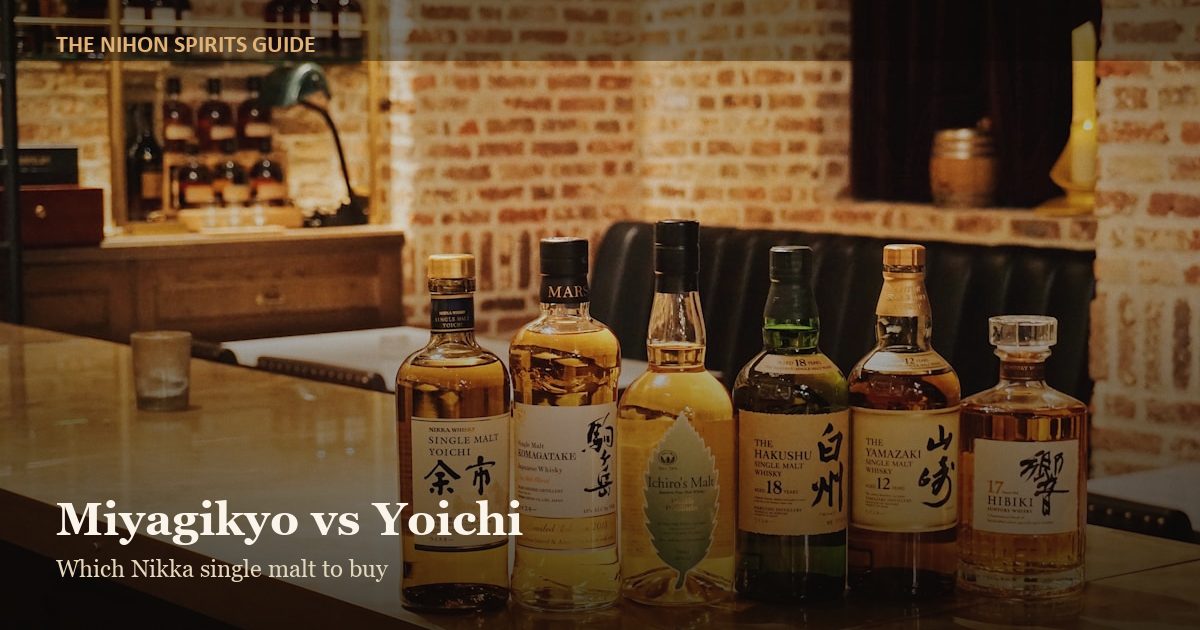
Miyagikyo and Yoichi are Nikka’s two distilleries, built specifically to produce opposite styles of single malt. Read more
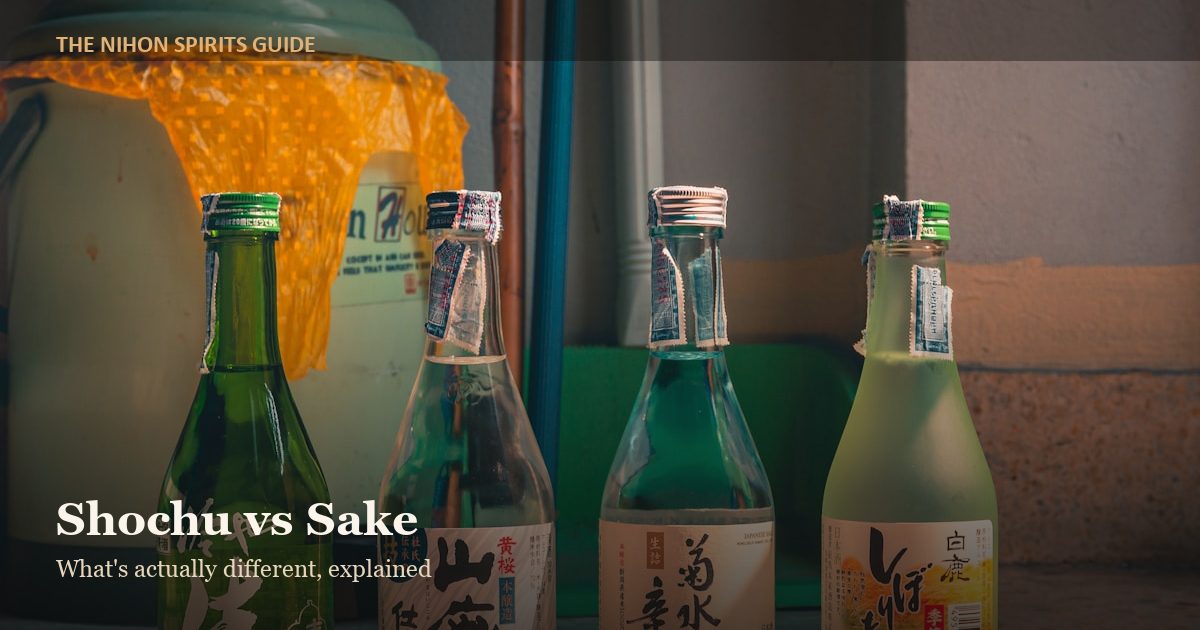
Sake is brewed, shochu is distilled, and that one difference explains almost everything else. Read more
Yes, Nikka Yoichi is worth it if you want a genuinely peated, coastal-style Japanese single malt, a flavor profile most Japanese whisky doesn’t offer at all. Read more
Yes, Nikka Miyagikyo is worth it if you want a softer, fruitier, more approachable entry into Japanese single malt than its smoky sibling Yoichi. Read more
Kakubin vs Toki comes down to which market each was built for. Read more
Suntory Kakubin is Japan’s best-selling whisky, a blend of Yamazaki, Hakushu, and Chita whiskies first released in 1937 and still made to the same basic recipe today. Read more